

Nam Kwan (Korean, 1911-1990)
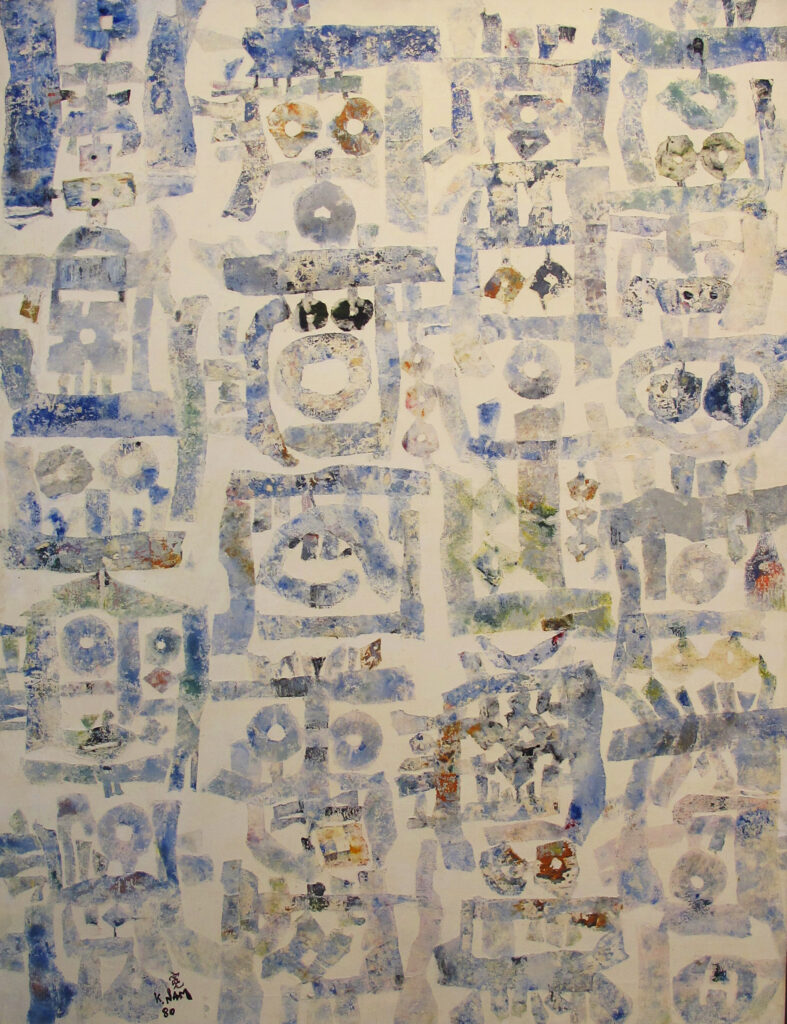
Nam Kwan (1911–1990) was a pioneering figure in modern Korean art and one of the earliest Korean artists to gain recognition in Europe. In 1958, he became the first Korean artist invited to the Salon de Mai in Paris, and in 1966, he received the Grand Prize at the Biennale de Peinture in Menton, France. These achievements marked an important milestone in the international recognition of Korean modern art.
Nam Kwan developed a distinctive visual language that brought together European abstraction and East Asian sensibilities. Drawing inspiration from ancient scripts, murals, archaeological remains, and weathered surfaces, he transformed these elements into abstract symbols and fragmented forms, creating a unique approach to Korean abstraction.
The experiences of war and Korea’s division also remained an important undercurrent in his work. Rather than depicting them directly, Nam Kwan translated memories of destruction and human suffering into symbolic forms and traces.
Through this synthesis of Western abstraction, Eastern visual traditions, and personal historical experience, Nam Kwan established a distinctive position in Korean modernism and is regarded as one of the important pioneers of Korean abstract painting.